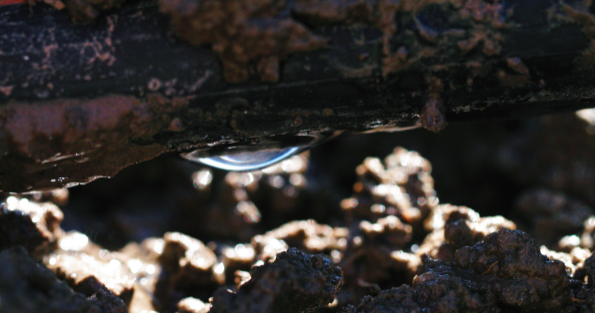
mini-documentary: Precise Water, Precise Nutrition
How drip fertigation can make Dutch onion cultivation
smarter, more efficient, and more resilient
A healthy Dutch onion harvest does not begin with the harvesting machinery; it starts much earlier—beneath the soil surface, where the onion’s naturally small root system must be able to absorb sufficient water and nutrients. It is precisely here that an important innovation in Dutch onion cultivation is taking place. Through drip fertigation, Dutch growers are gaining greater control over their onion growth—not by using more water or nutrients, but by making them available exactly where and when they will have the greatest impact.
2018: The year that exposed the vulnerability
In 2018, it became painfully clear just how vulnerable Dutch onion cultivation is to prolonged drought. According to Statistics Netherlands (CBS), the average gross yield of seed-grown onions plummeted that year to 35.5 metric tonnes per hectare, down from 55.7 tonnes the previous year. From approximately 25,360 hectares of onions, the total harvest amounted to only about 890,000 tonnes. The province of Zeeland was hit particularly hard, with yields averaging just 15 tonnes per hectare. Since then, the area dedicated to onion cultivation in that province has more than halved.
The exceptionally poor 2018 harvest prompted the Dutch onion sector to rethink its approach to water supply. Consequently, as part of the large-scale, multi-year Dutch Onion Research Program Uireka, initial experiments with subsurface drip irrigation were launched in 2019. Beginning in 2020, this approach within Uireka evolved into a series of multi-year field trials. In 2023, fertigation was added to these.
Water budget
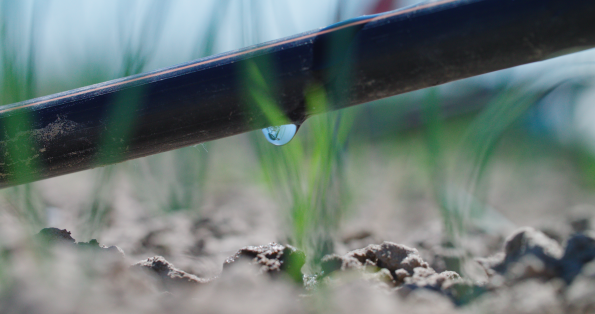
In the Netherlands, the availability of fresh water is often taken for granted. Yet, the reality on much of the agricultural land is quite different. Particularly in Zeeland—as well as in the coastal provinces of North Holland and Groningen—salinization and prolonged dry spells are posing an increasing challenge, making fresh water a precious production resource.
The core research question is as simple as it is challenging: how can a grower achieve the best possible onion harvest using only a limited supply of fresh water?
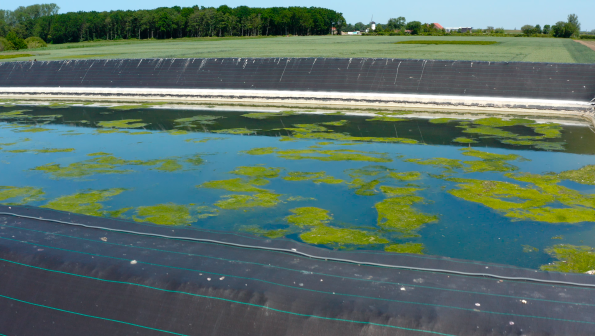
To address this, the researchers worked with a predetermined water budget. At the Dutch experimental farm 'De Rusthoeve'—under the auspices of the Onion Innovation and Knowledge Centre (Uien Innovatie Kennis Centrum)—rainwater collected during the winter is stored in a reservoir for use throughout the growing season. The objective is not to provide unlimited water to achieve the highest possible yield, but rather to make the most effective use of the available fresh water.
A drop in the right place
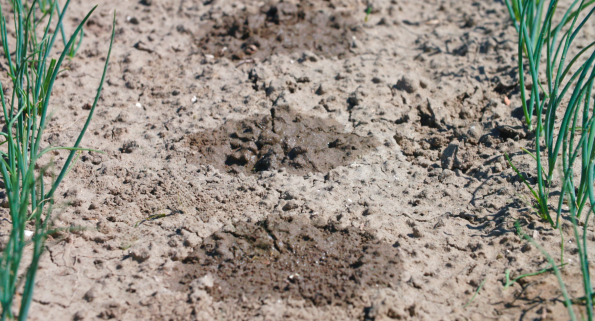
In traditional irrigation, water is distributed over the crop—either via a water cannon or a spray boom pulled across the field. Subsurface drip irrigation works quite differently. Water is delivered in measured amounts near the roots through thin hoses buried a few centimeters below the soil surface. This keeps the foliage dry and allows the grower to distribute water precisely throughout the growing season.
The technique makes it possible to apply small, frequent amounts of water, rather than relying on a few large-scale irrigation applications.
Timing is the crucial factor here. Trials conducted by Uireka show that water application early in the growing season can be particularly effective. Around the three-leaf stage, targeted irrigation can contribute to continued healthy crop development.
The key, therefore, is not to use every available drop immediately, but to apply water when the crop will truly benefit from it.
From irrigation to drip fertigation
Fertigation involves adding soluble nutrients to irrigation water, allowing both water and nutrients to reach the root zone together. Instead of applying all fertilizers in granular form—either on or into the soil—growers can deliver a portion of the nutrients more precisely, closer to the roots, and better aligned with the crop's development.
Lessons from another dry year
The 2023 growing season clearly highlighted the value of this technique. Between early May and the end of July, the trial field received only 76 millimeters of rainfall. The control plot—which received no supplemental irrigation—yielded 19.5 tonnes of onions per hectare. With a targeted drip irrigation supply of just 47.5 millimeters, the yield rose to 46.5 tonnes per hectare—a remarkable difference of 27 tonnes per hectare under the specific conditions of this field trial. Additional water increased yields, but only up to a certain point.
Furthermore, initial drip fertigation trials in 2023 showed a statistically significant yield increase compared to subsurface drip irrigation combined with granular fertilization.
The subsequent 2024 growing season was much wetter; consequently, the differences between the various irrigation treatments in that trial were not statistically significant. The fertigation trial did reveal an interesting finding: there was no difference in yield between 120 and 150 kilograms of nitrogen per hectare applied via drip fertigation.
2025: the latest trial results
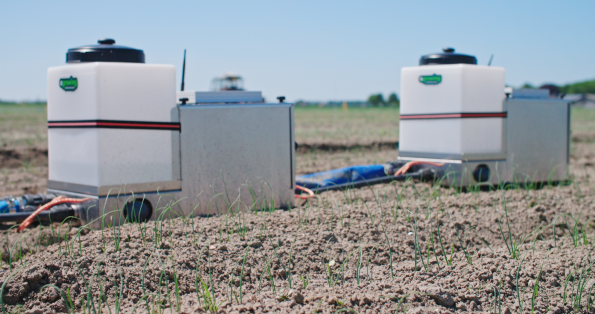
During the dry 2025 growing season, Uireka continued its trials. The findings demonstrate the significant impact that irrigation can have under such conditions. Across the various cultivation systems and fertilization strategies studied, an application of 60 millimeters of water via subsurface drip irrigation yielded approximately 60.5 tonnes of onions per hectare. This figure rose to 66.7 tonnes with 90 millimeters of water, reaching approximately 70.8 tonnes at the highest application level tested—113 millimeters. These differences in yield were statistically significant.
How onions receive nutrients also makes a significant difference. In the 2025 Uireka trial, subsurface drip irrigation combined with traditional granular fertilization resulted in an average yield of 63.6 tonnes of onions per hectare. When nutrients were delivered directly to the root zone through the same drip irrigation lines, the yield increased to 68.4 tonnes—a statistically significant gain of nearly 5 tonnes per hectare, even though the total number of onions harvested remained virtually the same. The additional yield was therefore primarily due to the onions having a greater individual weight. https://uireka.nl/wp-content/uploads/2026/04/rapport-2026-02_irrigatie-2025.pdf
the 2026 harvest paradox
Against this backdrop, the latest national harvest estimate appears contradictory. According to Statistics Netherlands (CBS), the preliminary gross yield for bulb onions in 2026 reached 45.7 tonnes per hectare—14 percent lower than the record yield of 53.2 tonnes in 2025. However, this matches the average yield per hectare seen in 2023 and remains significantly higher than the 35.5 tonnes recorded during the disastrous year of 2018. Furthermore, the total harvest of approximately 1.49 million tonnes is in line with the ten-year average. The decline, therefore, also reflects the exceptionally high baseline set in 2025.
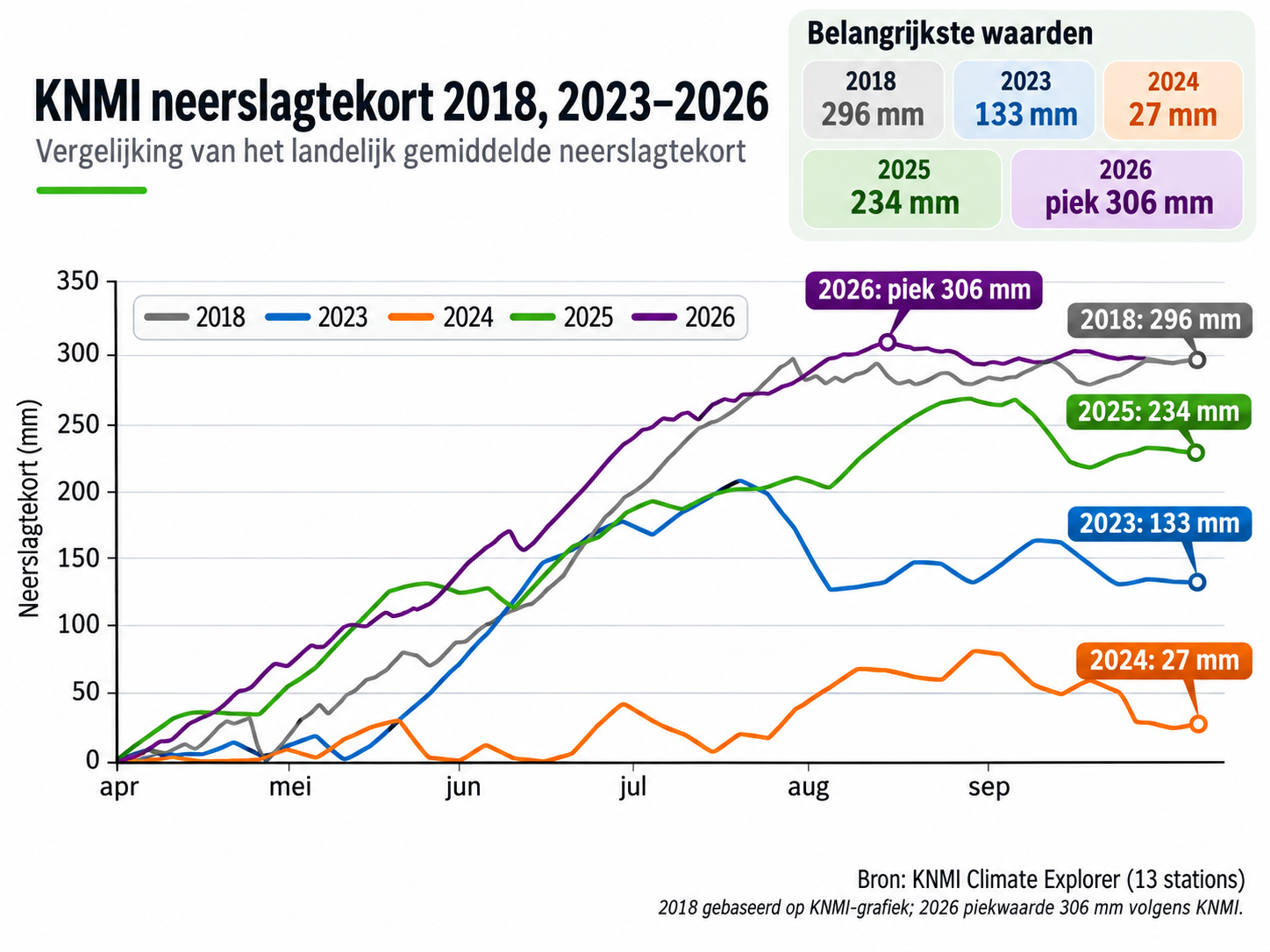
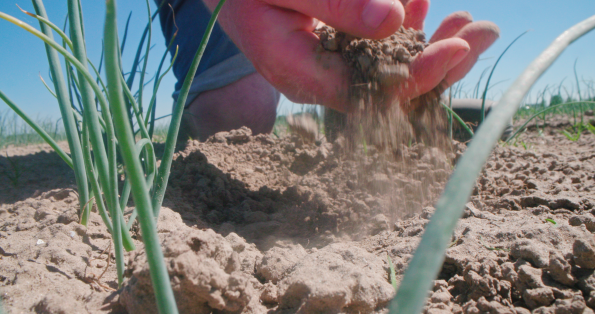
Drought was also severe in 2026. The Royal Netherlands Meteorological Institute (KNMI) calculated a maximum national precipitation deficit of 306 millimeters—nearly identical to the 309-millimeter deficit seen in 2018. This national average masks significant regional variations; for instance, in Kerkwerve (on the Dutch island of Schouwen-Duiveland), the deficit reached as high as 416 millimeters in 2026. Yet, a national precipitation deficit is not a direct predictor of onion yields. The performance of an onion crop is influenced by a range of factors—including the timing of drought during the growing season, local rainfall, soil conditions, crop health, and water availability—with extremely high temperatures playing a particularly critical role. Experience has shown that onions do not respond well to such heat.
Moreover, subsurface drip irrigation is far from being common practice in Dutch arable farming. Research by Prosu (the data and media company behind the Dutch agricultural magazine Akkerbouwkrant) indicates that approximately 9% of the arable farmers surveyed use drip irrigation. The specific proportion for onion cultivation is not known.
There is no reliable nationwide figure for the onion acreage using these techniques in 2026. Furthermore, the harvest estimates provided by Statistics Netherlands (CBS) do not distinguish between fields that use these systems and those that do not.
The grower in the driver’s seat
The true innovation lies not merely in the drip irrigation tubing itself, but rather in the enhanced ability to determine—with increasing precision—when and in what quantities a crop requires water and nutrients. Today, Dutch onion growers have access to a wealth of information: historical cultivation data, real-time weather information, weather forecasts, and digital soil moisture measurements all combine to provide an increasingly clear, up-to-date picture of what is happening both above and below the ground.
Sensors continuously monitor soil moisture levels, while historical data helps growers understand how the crop has responded under similar conditions. By combining this information with weather forecasts and the specific growth stages of the onion, growers can tailor their irrigation and nutrient application with increasing precision to meet both current and anticipated needs.
If a warm, dry spell is forecast, irrigation can be adjusted proactively—before moisture stress can hinder crop development. Conversely, if soil moisture is sufficient or rain is expected, unnecessary irrigation can be avoided. Similarly, the application of nutrients can be managed much more precisely throughout the growing season.
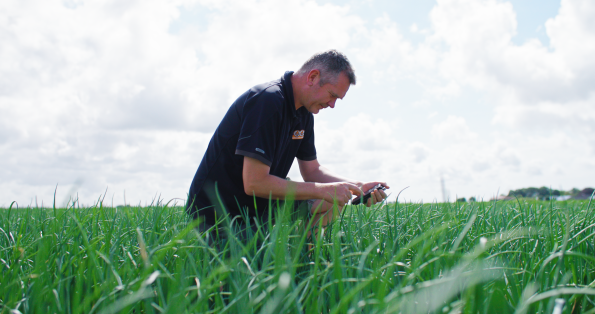
This gives growers greater control over the development of their crops. It is not the technology that makes the decisions, but the growers themselves, supported by increasingly accurate data—shifting the approach from reacting to conditions to anticipating what lies ahead. This method was tested during the past growing season as part of the Uireka trial, with the results set to be presented this coming winter.
Every drop must prove its worth
What began after the exceptionally dry year of 2018 as a quest to make better use of scarce fresh water has evolved into a far more precise method of cultivation. Multi-year trials conducted by Uireka demonstrate that subsurface drip irrigation can lead to significant differences in yield, particularly during dry years. Fertigation adds another crucial dimension: more efficient nutrient utilization, offering the prospect of higher yields and larger onions.
There are further advantages, too. Because water is delivered underground, the foliage remains dry, which helps to mitigate the risk of moisture-related fungal infections. The technique can also help reduce water and nutrient losses—a benefit not only for the grower but also for the environment.
While results vary by season and individual plot, the overall trend is highly promising. This approach offers the Dutch onion sector new ways to integrate yield, quality, and sustainability—not by simply increasing the volume of water and fertilizers applied, but by using available resources more intelligently.
A significant step toward a more productive and resilient Dutch onion-growing sector, where every drop counts. Curious to see what this looks like in practical field trials? Find out in our mini-documentary: Precise Water - Precise Nutrition